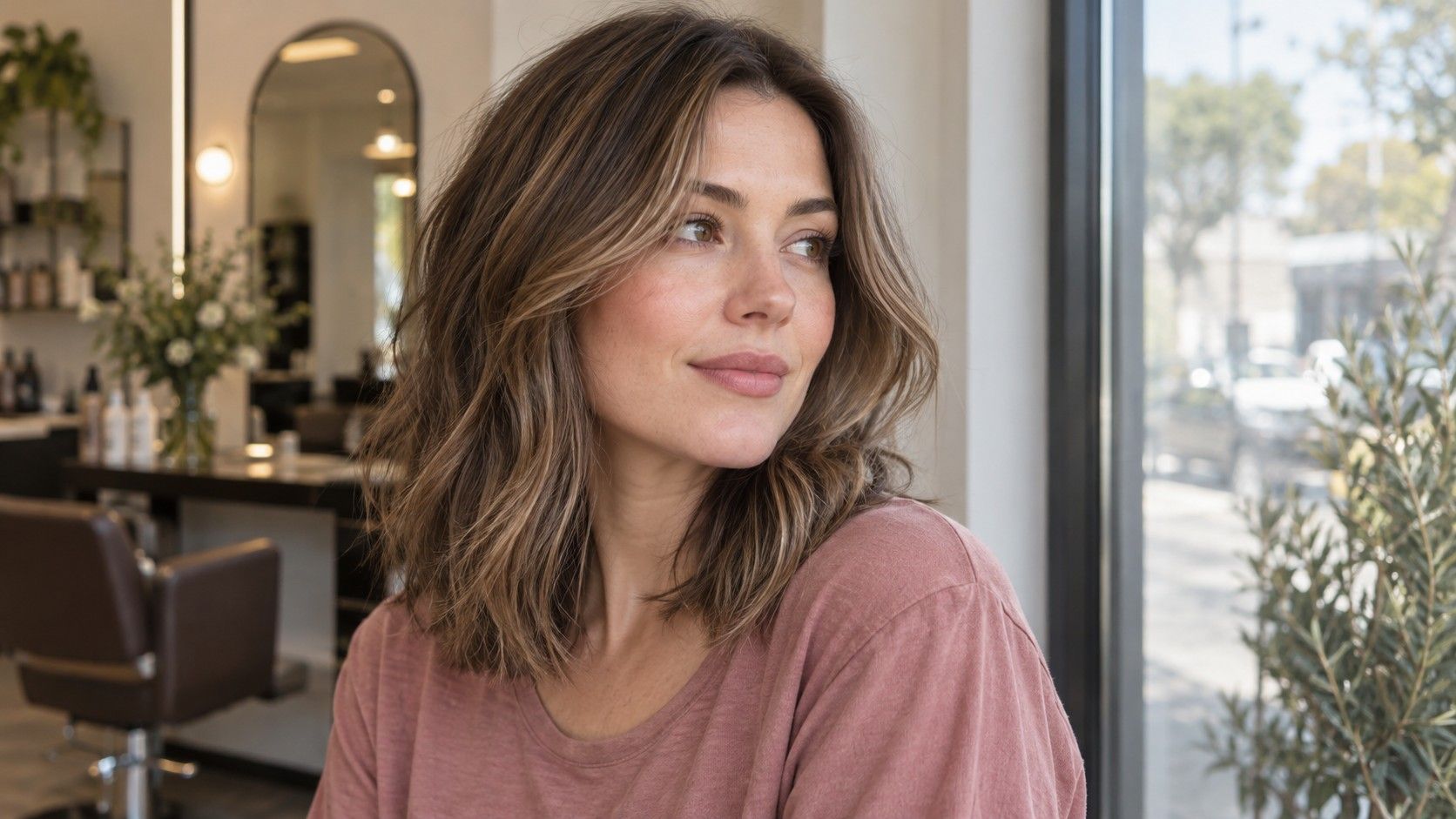
Soft Summer hair color starts with a blended effect, not one compulsory shade. Compare highlight contrast, natural depth and muted tone before deciding what to change.
Check the overall softness before collecting shade names
Soft Summer hair color advice usually points toward muted, gently blended effects. That does not mean every person using the label needs gray-looking hair, and it does not mean lighter is always softer. The practical question is whether the hair creates the kind of frame you want around your face. Begin with the relationship between the darkest roots, the lightest lengths and the features between them.
Look in indirect daylight with your hair in its usual parting. Remove a strongly colored scarf and wear a plain top. Notice whether the color reads as one blended mass with some movement, or as several distinct bands. Then tie the hair back. A light panel that merges into the lengths when loose can become a strong stripe beside the face when pulled away. Both views matter if you wear both styles regularly.
Within common seasonal systems, Soft Summer emphasizes muted chroma, usually with a cool or relatively neutral-cool direction. The label is a styling framework, and the boundaries vary between systems. Use it to ask better questions about intensity and contrast. It cannot establish a single correct dye shade, assess the condition of your hair or tell you how an existing color will respond to a new service.
Keep highlights connected to the base you want to retain
Highlights change the light-dark pattern as well as the color. Very pale sections against a deep base can create a graphic result even if the highlighted shade is cool. If your aim is a softly blended appearance, compare the size of that value gap before concentrating on whether the blonde is ash or beige. A subtle difference spread through the hair can read differently from one large bright panel.
Bring references that show placement from the front and the side. The pieces nearest the face deserve particular attention because they sit beside the brows, eyes and skin. Ask how the idea will look with your usual parting and haircut. A reference with waves may conceal boundaries that look clearer in straight hair; your daily styling routine is more relevant than the finish used for the photograph.
| Effect you are considering | What deserves a closer look | Question to bring to a consultation |
|---|---|---|
| Fine, blended highlights | The gap between the light pieces and base | Will this remain a gentle pattern when I wear my hair straight? |
| A brighter face frame | The size of the pale area beside the cheeks | Can we compare a narrower or less light version? |
| A deeper overall color | The outline around the face and brow relationship | Would retaining some lighter movement keep the result from feeling too solid? |
| Natural roots with lighter lengths | The transition as the roots grow | What will the blend look like between visits? |
A soft result does not require eliminating every visible highlight. Texture, movement and changes in light are part of real hair. The aim is a degree of contrast that you enjoy at a normal viewing distance. Step away from the mirror before rejecting a small variation that seems obvious only when you inspect the parting from a few inches away.
Compare muted brunette and dark blonde without changing everything
Someone searching for the best hair color for Soft Summer may be deciding between a subdued brunette and dark blonde. Those descriptions leave a wide range of depth and tone open. Gather references at neighboring depths rather than jumping directly from very dark brown to pale blonde. Keep the lighting and styling as comparable as possible so you can explain the difference you prefer.
A muted brunette can preserve definition around the face while avoiding a very stark dark outline. A dark blonde can create a lighter frame, though the result depends on your brows, roots and how much hair surrounds the face. Neither direction follows automatically from a season name. If a reference appeals because of its volume or haircut, separate that preference from the color before making a request.
Physical swatches can help at a salon, especially when held near the face rather than viewed against a white sample card. Compare the overall impression, then look at the degree of gray, gold or brown you perceive. Shade names such as mushroom, taupe and beige are useful conversational shorthand, but they are not standardized promises. Show the actual reference and say which quality you want to keep.
Reduce unwanted warmth without chasing a flat gray finish
Warmth and softness are different dimensions. Chroma is about how vivid or muted a color appears; a quieter color can still contain some warmth. If you dislike a bright golden reflection, identify that specific effect rather than asking for every trace of warmth to disappear. An extremely gray reference may solve one concern while creating a duller or heavier appearance than you intended.
Compare hair in daylight and under the lamps you use most often. Reflections change with the setting, and a phone may make a neutral-looking shade seem warmer. Check whether the concern affects the whole head or mainly older ends. That distinction matters in a consultation because an even all-over change may not be the only visual option. Describe what you see without guessing a technical correction.
Ask to see a balanced neutral reference alongside a cooler one at a similar depth. One may give you the restrained appearance you wanted without looking obviously ashy. For product use, follow the manufacturer's instructions and the advice of a qualified professional, including any required checks. A seasonal palette does not specify a product, a processing method or how often a toning treatment should be used.
Make the grow-out part of the choice from the beginning
A fresh salon image shows one moment. Your natural roots, usual washing routine and time between appointments shape the months that follow. Before choosing a light reference, look at how far it sits from your natural depth near the scalp. A pronounced difference may produce a more visible boundary as new hair grows. Whether that matters depends on your preference and the result you want to maintain.
Tell the colorist how often you realistically want to return and how you normally wear your hair. Ask for an explanation of the expected transition, rather than a promise that a particular technique is automatically low maintenance. A soft blend on one head of hair may require a different plan on another, especially when old color is involved. Share your color history honestly, including anything you cannot identify.
Consider keeping some natural depth when it supports the frame you like. This may also help the visual transition feel more familiar, but the service still needs an individual assessment. Ask to see the proposed effect with hair tucked behind the ears or tied up. Those everyday arrangements can expose roots and underlayers that barely appear in a carefully styled reference photo.
Choose an effect you can recognize in ordinary life
Before committing, write one clear sentence about the change: “I want the highlights closer to the base,” or “I want a muted brown with some movement.” That is more useful than collecting ten incompatible Soft Summer hair colors. Keep two or three references, including one that shows what you want to avoid, and explain the specific difference without relying on the person's face or complexion to speak for you.
Digital try-ons can help with broad comparisons, but check whether they alter skin, makeup or lighting along with the hair. Keep an original image beside the edits. A filter that paints an even taupe over every strand cannot show how real roots, highlighted sections and older ends will differ. Bring an edit as a visual sketch, then let an in-person consultation establish what is practical for your starting point.
If your current color is close to what you want, a smaller change may answer the question. Compare the face frame before deciding the entire head needs a new depth. After a change, view it with your regular clothes and ordinary styling in more than one light. Give yourself room to prefer some definition, a little warmth or natural variation. Softness is an effect to adjust, not a reason to flatten every interesting detail in your hair.
You can also keep your natural color. A seasonal result does not create an obligation to color it. The useful outcome is knowing whether a softer highlight pattern, a more balanced tone or no change best fits the way you want to look and the maintenance you are willing to do.